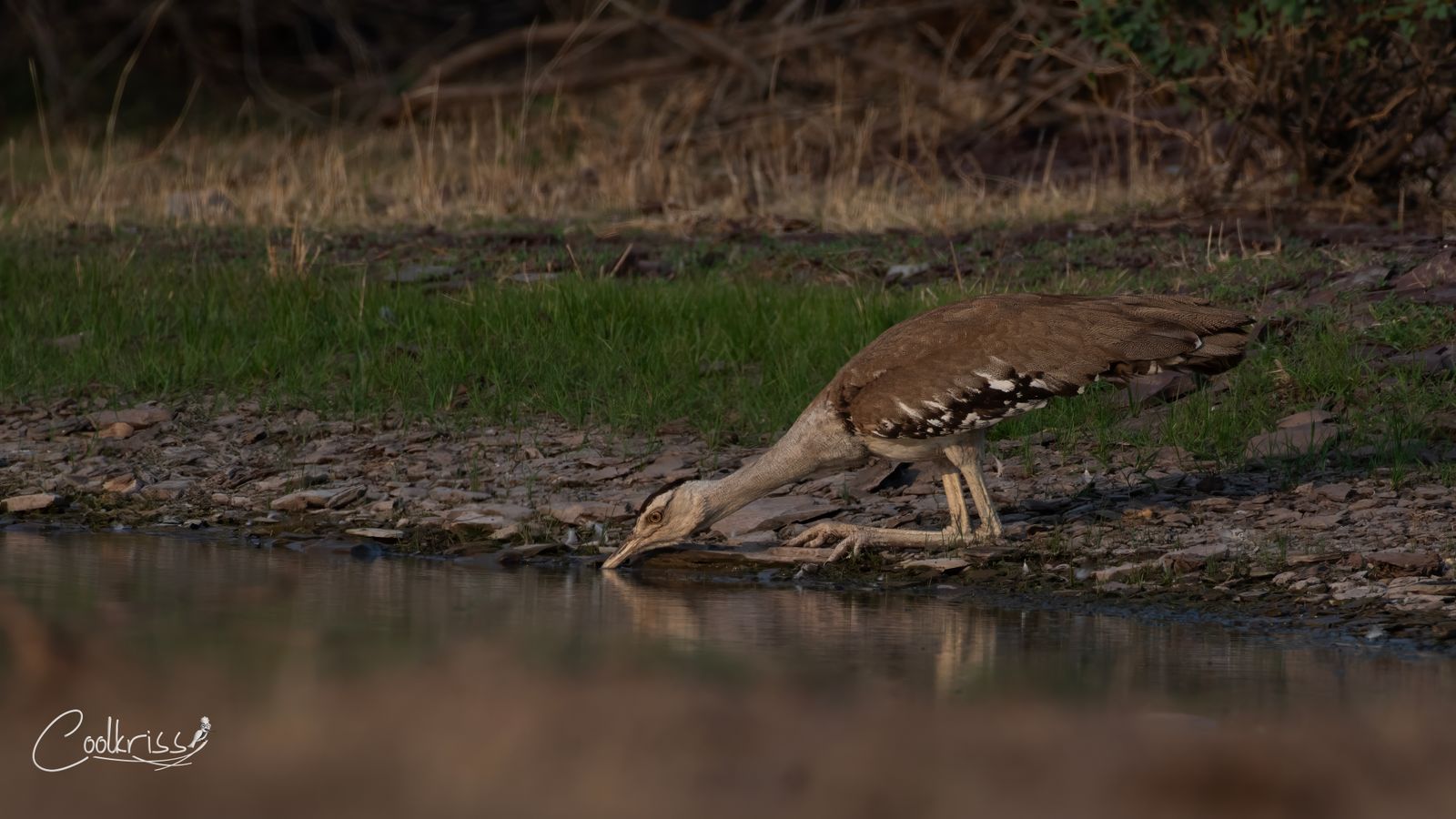
The Last Bustard of Rollapadu
Four years of dawns in a vanishing grassland — and the lone female Great Indian Bustard who taught me what patience, and loss, really cost.
A grassland that keeps its secrets
Some birds you photograph. A few you court. The Great Indian Bustard I did not so much photograph as attend — the way you keep returning to someone you're afraid of losing.
Rollapadu is a thin sweep of open grassland in Kurnool, the kind of country India keeps quietly ploughing under. To most eyes it looks like nothing: dry grass, a few thorn trees, heat standing over the plain like water. But that openness is the whole point. The bustard is a bird of wide horizons, and Rollapadu was once among the most dependable places in the country to stand in its presence — a bird nearly a metre tall, one of the heaviest flying birds in the world, walking through gold as if it owned the light.
By the time I began going, it owned very little. Fewer than 150 Great Indian Bustards survive in the wild today, most of them in the deserts of Rajasthan. At Rollapadu, the count had come down to the loneliest number there is. One. A single female — the last of her kind in that grassland.
The long road in
Getting there was its own ritual. Permission had to be arranged with the DFO well in advance; you did not simply drive up to Rollapadu and walk in. On the morning itself a forest beat officer would ride along with us, and we went in our own vehicles down a track that was then more rut than road — none of the facilities the sanctuary has today. Dust, a slow crawl, the light coming up pink over the grass.
I made that drive season after season, for the better part of four years.
Four years of almosts
For a long time the grassland gave me nothing but signs. A flattened scrape where she had rested. A direction a watcher had last seen her walk. And once — the hardest thing I found in all those years — a broken egg going rotten in the grass, the shell pulled apart by a fox.
That was when the full weight of it landed. A lone female, with no mate left in the grassland, will still do what her body tells her to. Each season she laid a single egg. Each season it went unfertilised, and the foxes or the sun took it. I had come to photograph a bird; I was in fact watching the quiet end of a lineage, one infertile egg at a time.
You learn a strange kind of patience in a place like that. Not the patience of waiting for good light, but the patience of returning to a story you already suspect will break your heart.
The morning she walked into the light
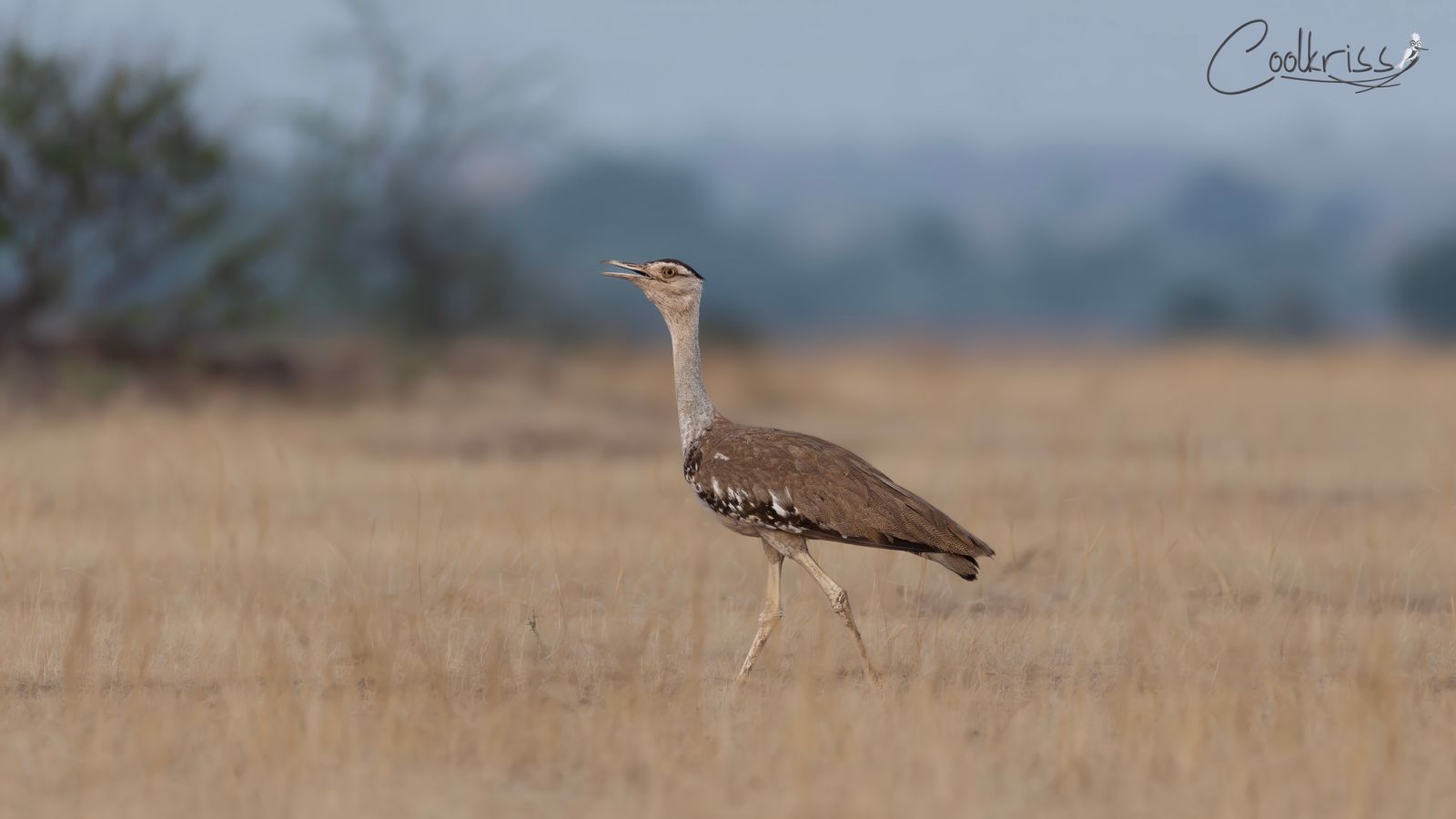
It finally happened in March 2018.
We had been scanning the plain since first light, and then she was simply there — unhurried, head high, bill parted against the heat, walking through the dry gold as though four years were nothing at all. A particular stillness comes over you at a moment like that. You stop being a person with a camera. You hold your breath, you keep the bird in the frame, and you try not to let your hands shake.
Then the shutter. And after it, something I hadn't expected: not triumph, but a kind of ache.
What the photograph is really of
I don't think of this as a trophy. Four years didn't buy me a prize; they bought me an understanding. This frame may be one of the last records of a bustard on the Rollapadu grasslands — a bird photographed not at the height of her kind, but at its vanishing.
The Great Indian Bustard is running out of time, and it is running out for reasons we could still fix: grasslands lost to the plough and to "wasteland" development, and power lines strung across the last open country its heavy, low-flying body cannot dodge. Places like Rollapadu are not empty. They are among the most endangered landscapes we have — and the bird that walked through my viewfinder that morning is the reason they are worth fighting for.
I photograph birds not to collect them, but to understand them. This one taught me what that really costs — and why it matters that we reach the grasslands before the grasslands are gone.